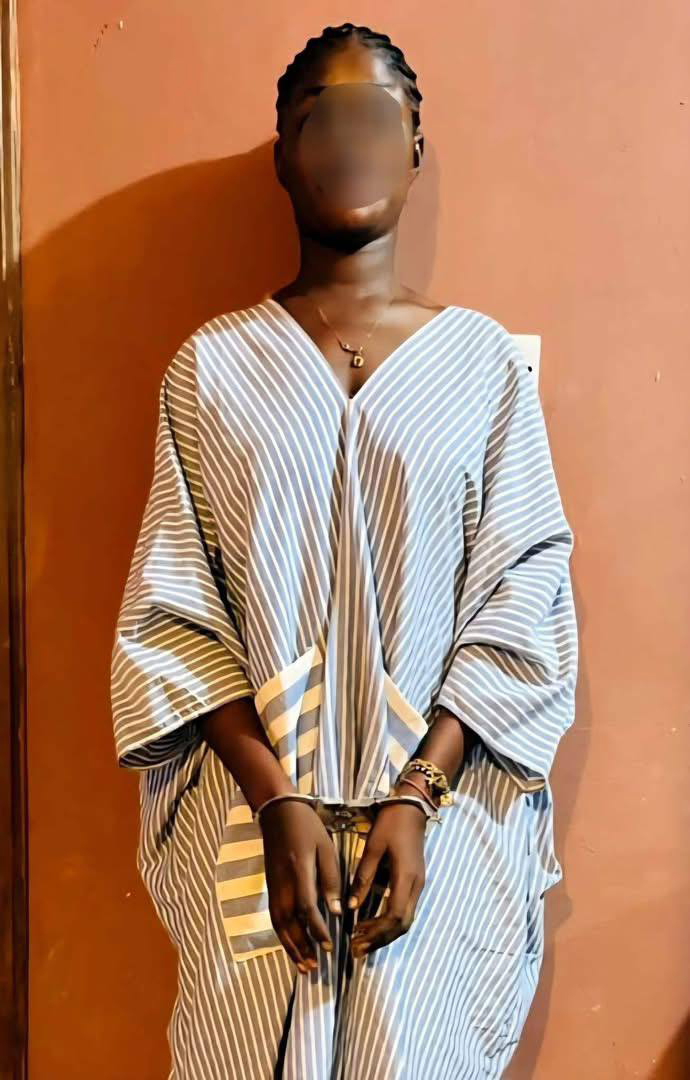
Freedom of speech is one of the most cherished rights in Ghana’s democracy. It allows citizens to express opinions, criticise governments, hold leaders accountable and participate freely in national discussions.
Freedom of speech is not merely a constitutional privilege; it is the very breath of democracy. A society that claims fidelity to democratic governance must be prepared to tolerate not only agreeable opinions but also uncomfortable truths, sharp criticisms, and expressions that challenge prevailing power structures.
The right is guaranteed under the 1992 Constitution and has become one of the defining features of Ghana’s democratic journey since the beginning of the Fourth Republic in 1993.
Ghana’s return to constitutional rule marked a significant departure from periods of military governance when political expression was often restricted.
During the era of the Provisional National Defence Council (PNDC) under Flight Lieutenant Jerry John Rawlings, critics, journalists and political opponents frequently complained about censorship, intimidation and restrictions on dissent.
The transition to democracy, therefore, ushered in a new era where citizens could openly discuss national issues without fear of state repression.
Over the past three decades, Ghana has earned international recognition as one of Africa’s strongest democracies, with a vibrant media landscape and active civil society.
However, recent developments have raised issues about whether the country’s hard-won freedoms are coming under increasing pressure.
Since the beginning of President John Dramani Mahama’s current administration in January 2025, a number of arrests linked to public comments, social media posts and alleged false publications have generated concern among journalists, lawyers, civil society organisations (CSOs), political opponents and political observers.
Among the notable cases was the arrest of opposition activist Alfred Ababio Kumi, popularly known on social media as Adenta Kumi, on May 23, 2025, following allegations he made on social media concerning purported judicial misconduct.
In August 2025, Wontumi TV presenter Akyemkwaa Nana Kofi Asare was arrested after comments linking President Mahama to a fatal military helicopter crash.
The same month, TikTok personalities Prince Ofori, popularly known as Fante Comedy, and Yayra Abiwu, known as Akosua Jollof, were arrested after controversial comments about victims of the helicopter tragedy.
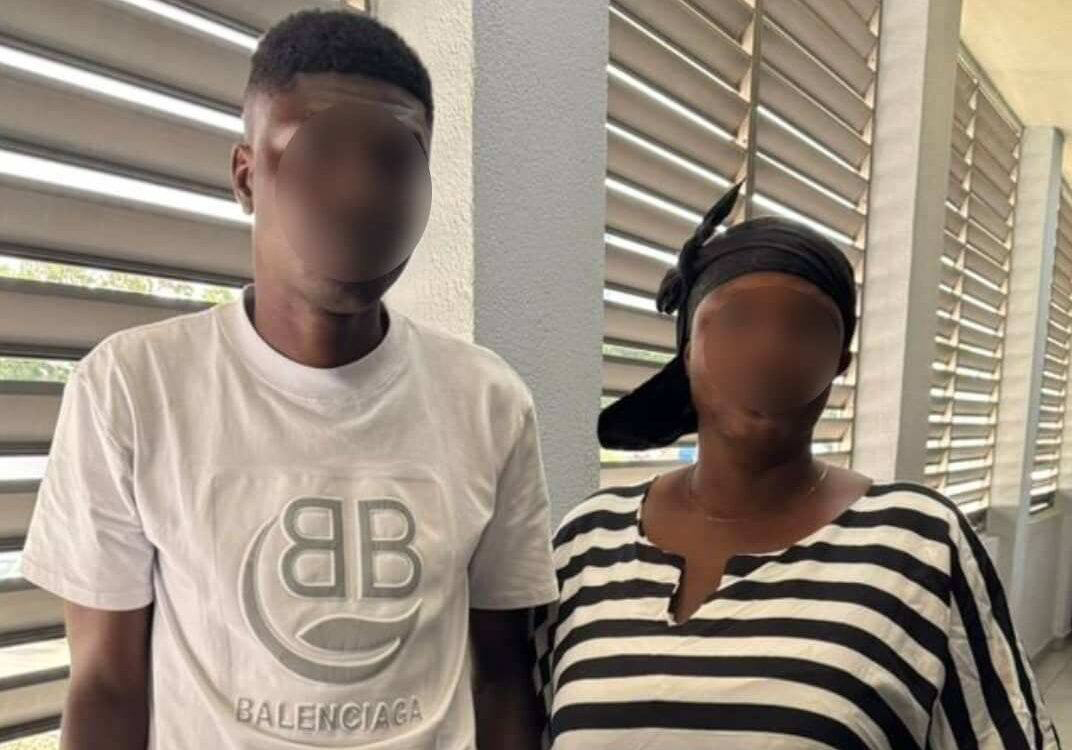
Two other social media users, Priscilla Duah Birago and Charity Dede Tetteh, were also arrested in August 2025 after making comments about President Mahama following the crash.
In the same month, Sir Obama Pokuase, a social media user, was arrested on 13 August, 2025 and detained for 5 days.
He was arrested for allegedly sharing videos and images of individuals brandishing high-grade firearms on social media. The police accused him of false publication and of causing fear and panic.
All these social media activists and commentators were arrested for offensive, false publication and inappropriate statement per the statement from the security agencies in charge of their arrests, while critics questioned whether arrests were the most appropriate response per the laws on freedom of speech.
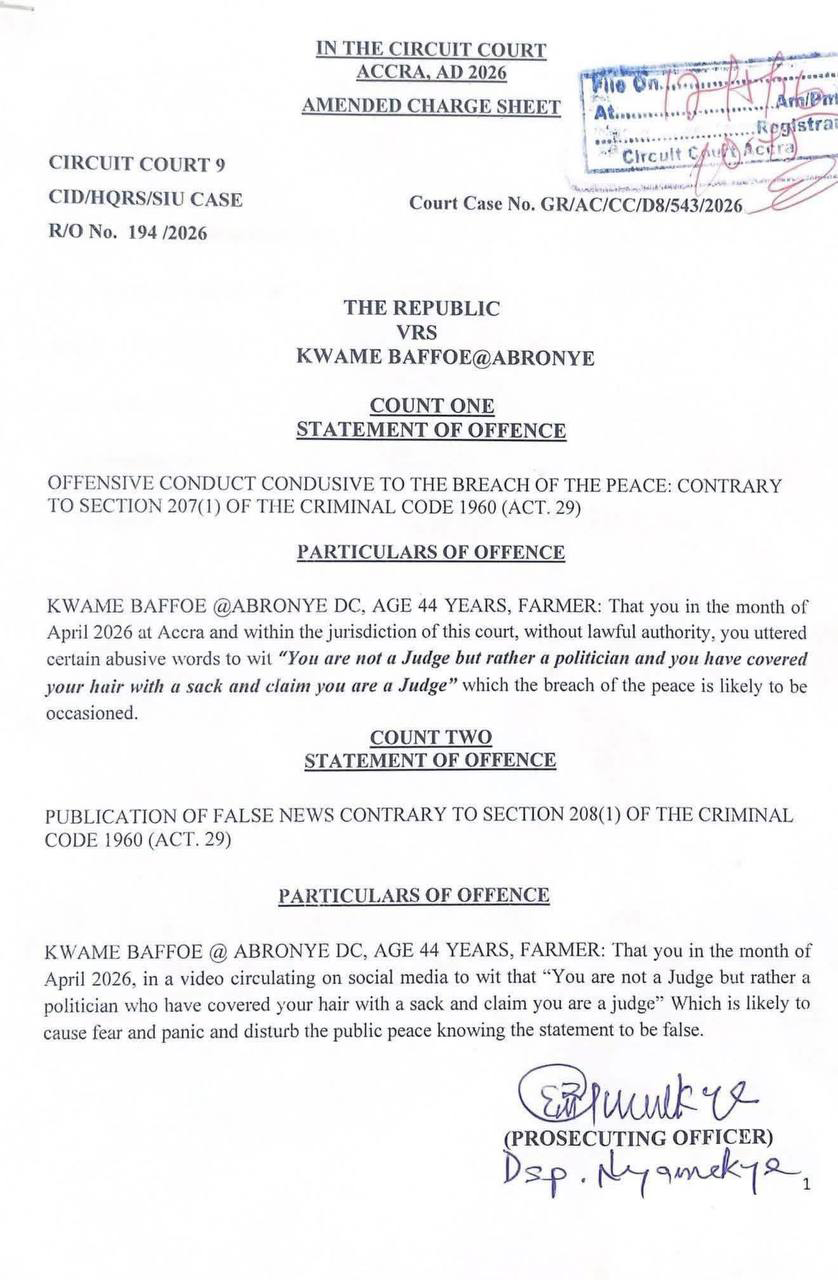
On September 8, 2025, Bono Regional Chairman of the opposition New Patriotic Party (NPP), Kwame Baffoe, popularly known as Abronye DC, was arrested on allegations of publication of false news and offensive conduct likely to disturb public peace.
Days later, TikTok personality David Kwadwo Prah Afful, known as Kwame Nkrumah II, was arrested over comments authorities said amounted to threats and incitement to violence.
Another widely discussed case involved blogger Samuel Amadotor, who was arrested and detained in November 2025 over allegations of publishing false information concerning a former chairman of the National Communications Authority.
Later that same month, Wendell Nana Yaw Yeboah was arrested after making allegations that three regional ministers were involved in illegal mining activities.
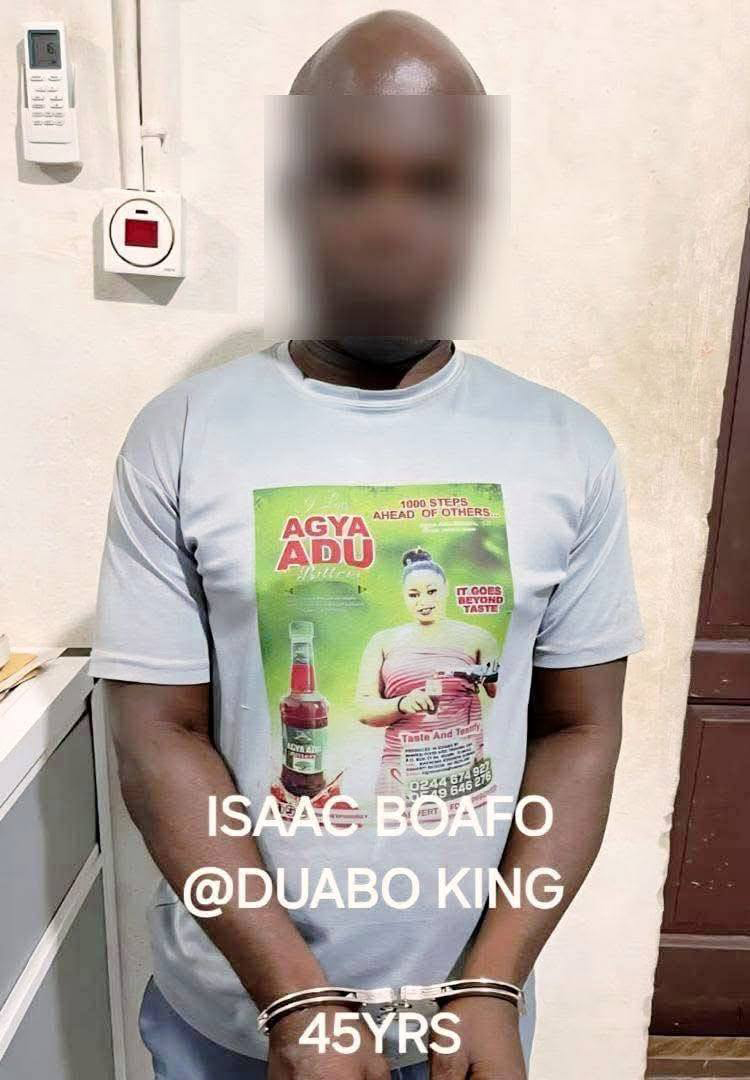
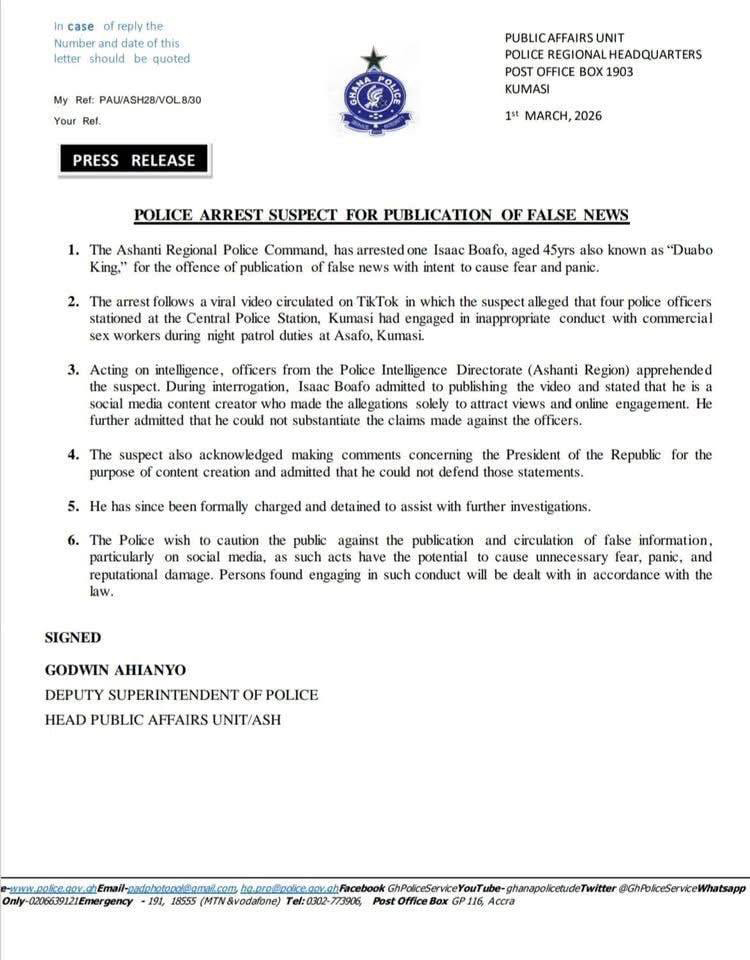
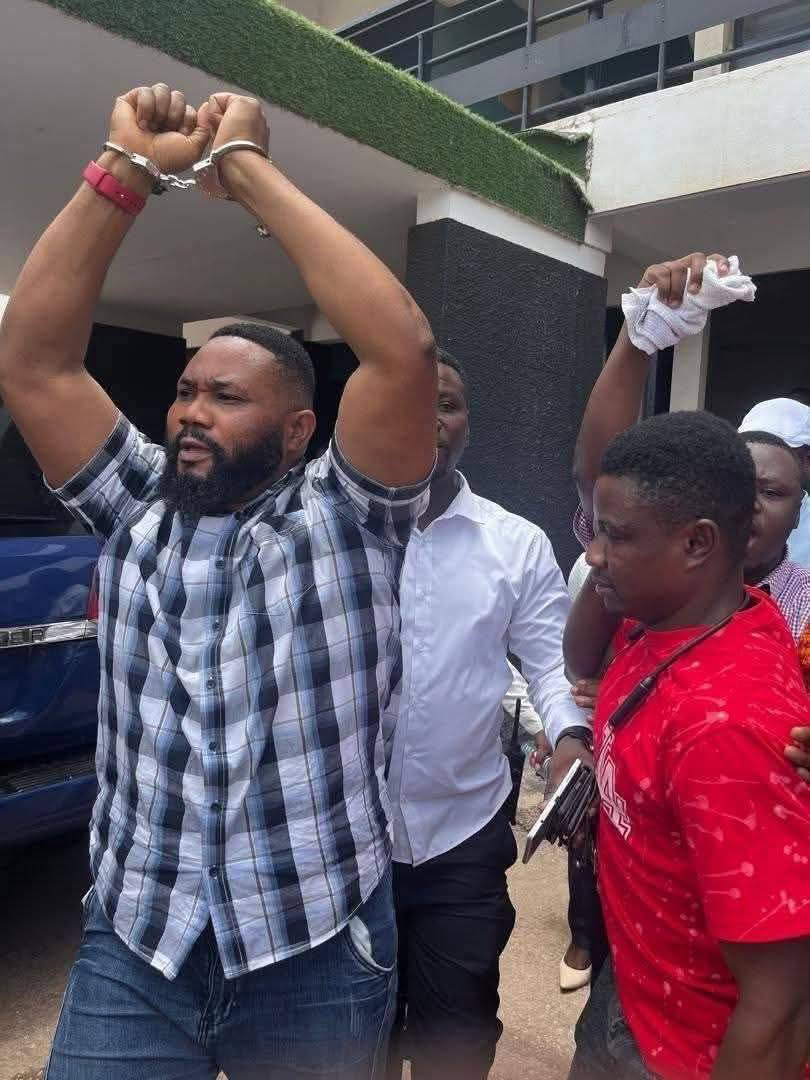
The trend continued into 2026. On March 1, TikTok creator Isaac Boafo, popularly known as Duabo King, was arrested over a viral video containing allegations against police officers in Kumasi.
On April 7, Pastor William Gyimah, founder of Elohim International Ministry, was arrested after making statements about Vice President Professor Jane Naana Opoku-Agyemang in a video that circulated online.
Two opposition figures, Abronye DC and Abubakar Yakubu, also known as Baba Amando, were arrested on April 13, 2026, over online publications.
Abronye was arrested again following remarks he made about a Circuit Court 9 judge, alleging that the judge was acting in the interest of the NDC, the party of the current president.
Baba Amando, the Communications Officer of the Sunyani East New Patriotic Party (NPP), was arrested by the Criminal Investigations Department (CID) on April 13, 2026. He was detained and remanded by an Accra Circuit Court.
His arrest and initial detainment stemmed from allegations of offensive conduct, false publication, and circulating statements likely to incite fear and panic.
Specifically, investigations focused on social media posts and altered, derogatory images of President John Dramani Mahama and other ministers depicting their involvement in LGBTQ activities.
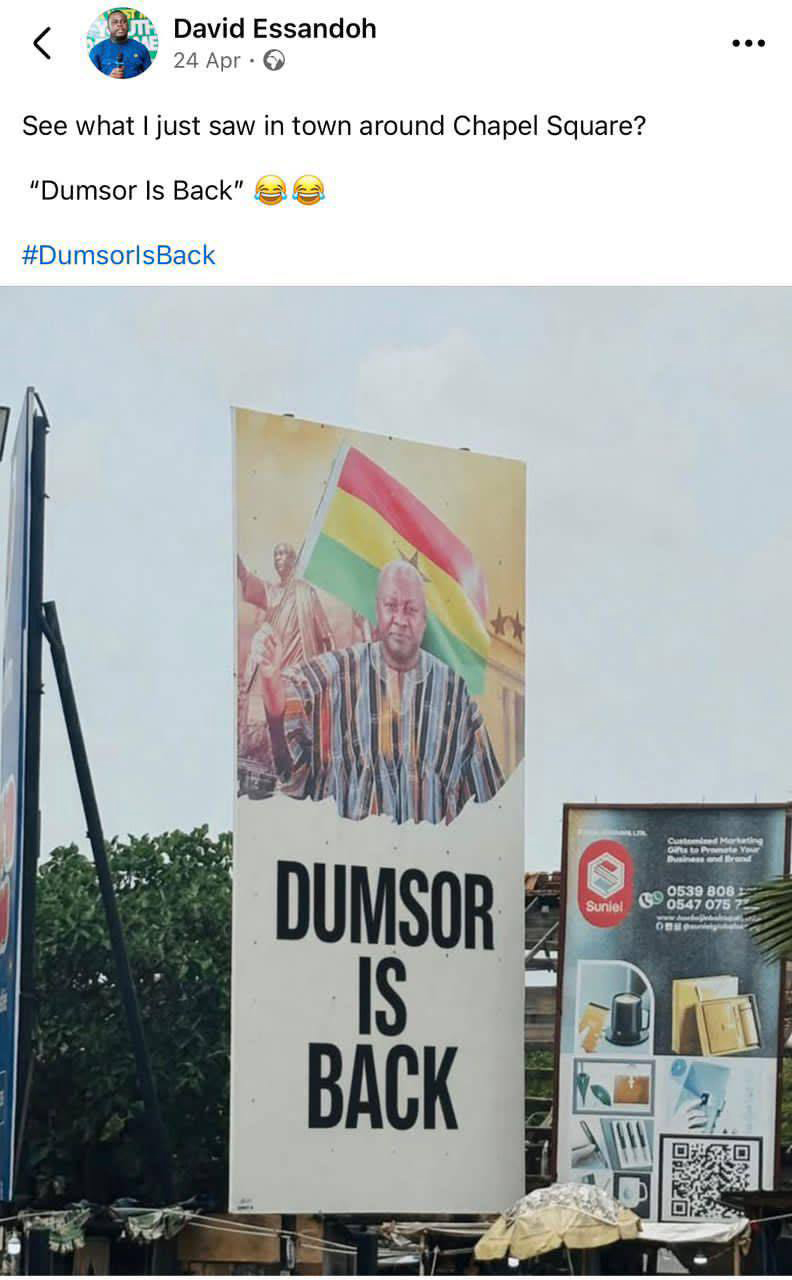
In May, Mr. David Essandoh, the NPP’s Agona West Constituency Organiser, was arrested by a team of approximately ten armed officials from the CID and BNI after posting an image of President Mahama with the caption “Dumsor is back”. The minority leader stated in his address.
On May 20, TikTok user Mahama Aminat, known online as Akosua Serwaa Minat, was arrested after authorities accused her of making threats against the President in a viral video where she was invoking curses on the president for his bad governance.
Many of these arrests have been carried out under Section 76 of the Electronic Communications Act and Sections 207 and 208 of the Criminal Offences Act, laws that criminalise certain forms of false publication, offensive conduct and electronic transmission of false information.
What are the laws saying?
Electronic Communications Act, 2008 (Act 775) – Section 76
“A person who by means of electronic communications service, knowingly sends a communication which is false or misleading and likely to prejudice the efficiency of life saving service or to endanger the safety of any person, ship, aircraft, vessel or vehicle commits an offence.”
The Act further states that a person may be considered to have known the communication was false if they failed to take reasonable steps to verify its accuracy before sending it. Conviction may result in a fine, imprisonment for up to five years, or both.
Criminal Offences Act, 1960 (Act 29) – Section 207
“Any person who in any public place or at any public meeting uses threatening, abusive or insulting words or behaviour with intent to provoke a breach of the peace or whereby a breach of the peace is likely to be occasioned, shall be guilty of a misdemeanour.”
Criminal Offences Act, 1960 (Act 29) – Section 208(1)
“Any person who publishes or reproduces any statement, rumour or report which is likely to cause fear and alarm to the public or to disturb the public peace knowing or having reason to believe that the statement, rumour or report is false is guilty of a misdemeanour.”
Section 208(2)
“It is no defence to a charge under subsection (1) that the accused did not know that the statement, rumour or report was false unless he proves that, prior to publication, he took reasonable measures to verify the accuracy of the statement, rumour or report.”
Condemnation of arrest from CSOs, Journalists, Political Parties and Statemen.
The growing number of arrests has triggered criticism from Civil Society Organisations (CSOs), journalists, and political figures.
The Executive Director of the Media Foundation for West Africa, Sulemana Braimah, has repeatedly warned that Ghana risks drifting toward what he calls the “criminalisation of speech”.
According to him, the increasing use of criminal laws to deal with speech-related matters could create fear among citizens and discourage robust public debate.
Former Vice President and 2024 NPP presidential candidate Mahamudu Bawumia has also expressed concern about recent developments. Commenting on some of the arrests, he stated that “these actions undermine free speech and are setting Ghana’s democracy backwards”.
He argued that democratic gains achieved over the years should not be weakened by actions that make citizens feel intimidated from expressing political opinions or criticising government policies.
Investigative journalist Manasseh Azure Awuni has also joined the conversation. In his public commentary on recent events, he has argued that democratic freedoms should be protected consistently and not based on political convenience.
The Minority in Parliament, led by their leader, Alexander Afenyo-Markin, emphasised the importance of free speech in Ghana’s democracy.
He also stressed that individuals who believe they have been defamed should seek redress through the appropriate legal channels rather than using state security agencies to intimidate or silence opposing views.
“Let me be clear about where I stand. I do not condone irresponsible speech, and I never will. Where speech genuinely damages reputation, Ghanaian law provides a remedy, a civil remedy, measured, proportionate and designed precisely for that purpose.
“What it does not provide, and what it was never designed to provide, is the conversion of a civil grievance, assuming without admitting that one exists, into a criminal prosecution, the marching of a man before a Circuit Court, the denial of his bail, and his consignment to the custody of a state intelligence service,” he stated after Abronye DC was arrested.
What was the position of President Mahama on free speech in opposition?
The debate has become particularly significant because President John Dramani Mahama himself raised similar concerns while in opposition.
In a 2022 open letter to former President Nana Addo Dankwa Akufo-Addo, Mahama strongly criticised what he described as the criminalisation of speech and journalism.
“I am appalled at the growing criminalisation of speech and journalism in Ghana,” Mahama wrote.
He further warned that the use of state power against critics was “a dangerous blueprint” for the country.
In the same letter, he told the then-president: “Ghana has long emerged from the unfortunate past where journalists were cowed by incarceration and brutalisation”.
Those statements have resurfaced in recent months as critics of the current arrests point to the President’s own words while in opposition.
The argument is that the principles Mahama defended then should remain relevant regardless of which political party is in government.
The call for a regulatory review of the laws
Lawyers, Judges, governance experts and democracy advocates have similarly called for a review of laws relating to false publication and offensive conduct.
They argue that some provisions are broad and can be interpreted in ways that may affect legitimate criticism and public commentary.
Others believe civil remedies, rather than criminal sanctions, should be preferred in many speech-related disputes.
Supporters of the government’s approach, however, contend that freedom of speech does not extend to threats, incitement to violence or the deliberate spread of false information capable of causing panic or public disorder.
They maintain that law enforcement agencies are simply applying existing laws enacted by Parliament.
The recent developments show a difficult challenge facing modern democracies. Governments must balance the need to combat harmful misinformation with the constitutional obligation to protect free expression.
For Ghana, a nation widely regarded as a democratic model in Africa, striking that balance will remain crucial.
As the country continues its democratic journey, many believe the true strength of Ghana’s democracy will be measured not only by elections and peaceful transfers of power, but also by how effectively it protects the right of citizens to speak, criticise and participate freely in national discourse.