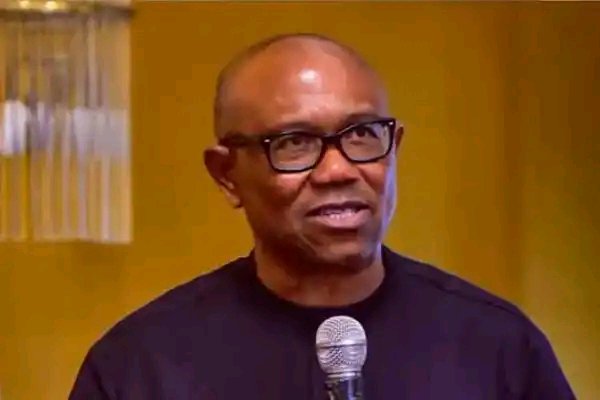
Nigeria Democratic Congress (NDC) presidential candidate Peter Obi yesterday asked the Tinubu Administration to concentrate on ending the economic hardship facing Nigerians rather than dissipating time and energy attacking critics.
He also raised alarm over the remand of activist Omoyele Sowore, describing it as a troubling signal for the country’s democracy.
In a statement by the Peter Obi Media Reach (POMR) and signed by its spokesman, Idris Zekeri Jnr, the group said it was uncanny that the Presidency had resorted to grandstanding and insults instead of addressing Obi’s remarks suggesting President Bola Ahmed Tinubu should consider resigning over what it described as worsening economic conditions and governance challenges.
POMR said the Presidency had failed to engage with the substance of Obi’s comments, choosing instead what it called “insults, distortions and self-congratulatory rhetoric.”
It maintained that Obi’s remarks were rooted in concerns about leadership responsibility and accountability rather than political partisanship.
The statement read: “Our principal’s comments were not about whether Nigeria operates a presidential or parliamentary system. They were about a fundamental principle of leadership: accepting responsibility for outcomes.
“The British Prime Minister did not resign because of the nature of the British political system. He resigned because he understood that leadership comes with responsibility and accountability.”
The group argued that resignation by political leaders is not peculiar to parliamentary democracies, citing former US President Richard Nixon, former Brazilian President Fernando Collor de Mello, former Peruvian President Pedro Pablo Kuczynski and former Argentine President Fernando de la Rúa as examples of leaders who left office under varying circumstances.
POMR also recalled that Tinubu himself, as an opposition leader, had on several occasions called for the resignation of former President Goodluck Jonathan during the fuel subsidy protests and after the abduction of the Chibok schoolgirls.
“Leadership standards should not change depending on who occupies the office,” the statement said.
On the economy, the media office said poverty, unemployment and the cost of living had increased significantly in recent years, insisting that no amount of political rhetoric could conceal the hardship millions of Nigerians were enduring.
“Businesses are shutting down. Manufacturers face unbearable production costs, while warehouses are filled with unsold goods because of weak consumer demand. Unemployment and underemployment remain widespread,” it said.
It further argued that government claims of economic growth and increased revenues had not translated into improved living standards, stressing that “the true measure of economic success is not the performance of the stock market but the well-being of the average citizen.”
On security, POMR acknowledged operational successes by security agencies but insisted that insecurity remained a major national challenge, with kidnapping, banditry and violent crime now national rather than regional concerns.
It also defended Obi’s record as governor of Anambra State, citing achievements in education, healthcare, infrastructure and fiscal management, and dismissed suggestions that the outcome of recent elections amounted to public endorsement of the administration’s performance, raising concerns about the credibility of the electoral process.
“Obi did not call for resignation out of malice or political calculation. He sought to draw attention to a leadership culture that must evolve if Nigeria is to make meaningful progress,” the statement said.
It urged the Federal Government to focus on insecurity, poverty, unemployment, power shortages and declining productivity rather than engaging critics.
“Nigeria deserves leadership that listens more than it lectures, serves more than it celebrates itself, and accepts responsibility rather than constantly searching for excuses.”
Obi expressed deep concern over the reported remand of activist Omoyele Sowore in Kuje Prison.
In a statement on his X handle, he warned against any perceived use of state institutions to suppress dissent, silence the press or restrict civic engagement, while acknowledging the judiciary’s role as the final arbiter of justice and stressing the need for vigilance to protect democratic institutions from being undermined.
Obi said a healthy democracy thrives on the protection of fundamental human rights, particularly freedom of expression and peaceful assembly, as guaranteed by the Constitution.
He noted that in a period already marked by insecurity and economic hardship, actions capable of heightening public tension should be carefully avoided.
He cautioned that treating activists, journalists and critics as threats rather than accountability partners could signal a drift toward authoritarianism.
Obi insisted that Nigeria’s challenges require inclusive dialogue and collective nation-building rather than the suppression of dissenting voices.
He urged relevant authorities to uphold the rule of law, protect Sowore’s constitutional rights, and ensure that security and judicial institutions operate with impartiality.
“We cannot build a New Nigeria if we continue to undermine the democratic structures meant to protect us all,” Obi stated.