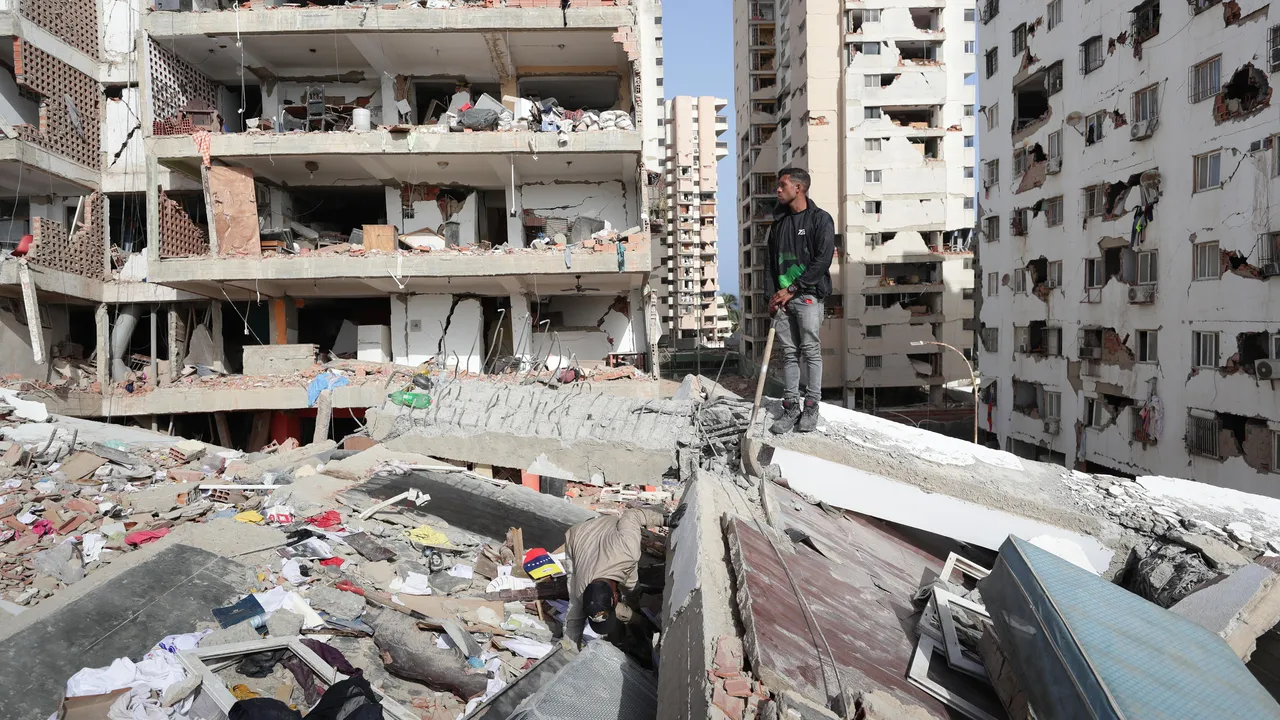
The death toll in Venezuela’s twin earthquake disaster reached 1,430 Saturday as rescue teams raced against time to find survivors and millions of people faced shortages of essential services, including clean water, sanitation and shelter.
The first US relief flights arrived in Caracas as the Venezuelan authorities faced growing criticism over the pace of the emergency response. Interim leader Delcy Rodríguez sought to reassure the public, saying the country was receiving support and “not alone” during the crisis.
The United States said a runway at Simón Bolívar International Airport had resumed operations, allowing C-17 military aircraft to land, while a naval vessel reached waters off Venezuela’s coast to assist relief efforts.
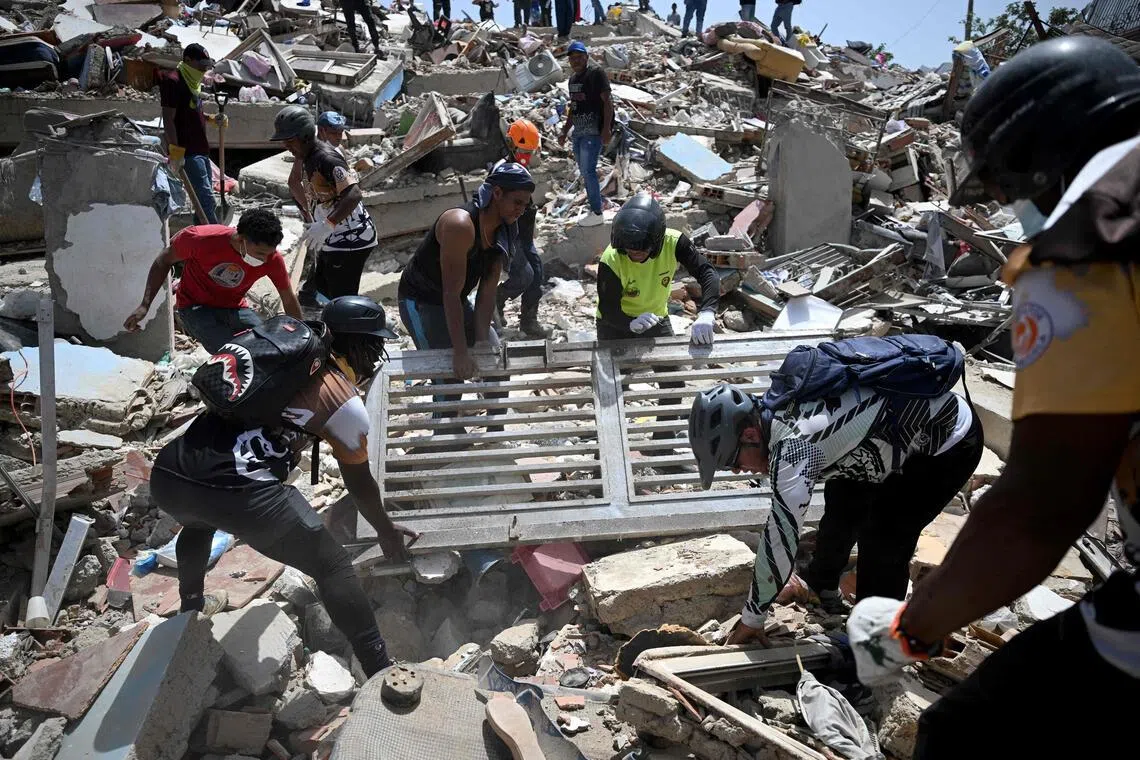
The UN humanitarian office OCHA said rescue and recovery teams from at least 17 countries were being prepared to support search operations and help locate survivors. However, in badly affected areas, residents continued digging through collapsed buildings themselves in desperate attempts to save those trapped beneath the debris.
Experts say the first 72 hours after a major disaster are the most critical period for finding survivors. A rare moment of hope emerged in the coastal region of La Guaira, north of Caracas, when residents rescued an infant alive from the ruins of a collapsed apartment building more than 32 hours after the earthquakes struck.
A video shared online showed a man overcome with emotion as he carried the rescued baby in his arms.The two powerful earthquakes, which struck within a minute of each other, left at least 920 people dead, according to initial figures.
UN aid chief Tom Fletcher warned that the number could rise significantly as rescue operations continue. The UN migration agency said assessments of population data and damage reports indicated that as many as 6.76 million people could be affected, requiring emergency accommodation, safe drinking water, sanitation facilities, healthcare, protection services and essential supplies.
The disaster has triggered anger among Venezuelans already struggling with years of economic hardship and political instability following the US-backed effort to remove former leader Nicolás Maduro.
Yessica Mendoza said she had to take her daughter’s body to a Caracas morgue herself after her 25-year-old daughter Yesimar Rodriguez and son-in-law Jhomel Anaya, 26, were killed when their home collapsed in La Guaira.
“We were the ones who pulled them out ourselves. No help ever came,” Mendoza told AFP. She said the couple would be cremated without a traditional funeral because their bodies had deteriorated rapidly.
During a visit to a damaged neighbourhood on Friday, Rodríguez faced angry reactions from residents who accused the government of failing to provide adequate assistance.
“The government isn’t doing anything for the people,” some residents shouted from behind security barriers near a destroyed building.Authorities later restricted access to La Guaira state as rescue operations continued. Fletcher said more than 50,000 people were believed to be missing. “It’s a very, very complex emergency response,” he said.
Rodríguez said she had spoken with US President Donald Trump and Secretary of State Marco Rubio, who she said pledged continued support for relief operations.
Washington said it was deploying more than 250 disaster response personnel, including three specialised search-and-rescue teams with trained dogs to locate people trapped beneath collapsed structures.
The earthquake is the strongest Venezuela has experienced in more than a century, striking a country already weakened by years of economic decline.
The collapse of public services, including healthcare infrastructure, has left millions vulnerable, while millions more Venezuelans have left the country in search of better conditions. The disaster also comes during a politically fragile period, with Venezuela still navigating a transition months after Maduro was removed from power.
“Even before the earthquakes, millions of people across Venezuela were facing food insecurity, collapsing health services, protection risks, and limited access to basic services,” the UN and other aid organizations said in a joint statement.
Major earthquakes of similar strength have caused catastrophic losses elsewhere, including Haiti’s 2010 earthquake that killed more than 200,000 people and the 2005 Kashmir earthquake that claimed around 73,000 lives.