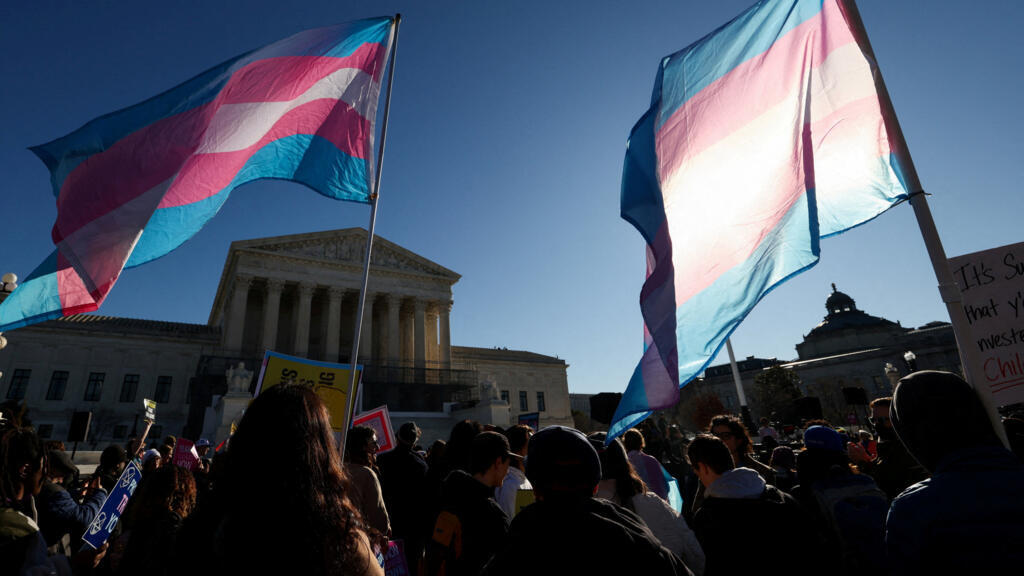
The US Supreme Court has ruled that states can prohibit transgender women from competing in female sports at public schools and colleges, upholding laws enacted in Idaho and West Virginia.
The decision stems from legal challenges brought by transgender students who argued the bans violated constitutional equal protection guarantees and federal civil rights protections under Title IX, which prohibits s3x-based discrimination in schools.
The court unanimously ruled that the state laws do not violate Title IX. However, the justices were divided on the constitutional issue, with the court’s six conservative justices finding that the bans do not breach the 14th Amendment’s Equal Protection Clause, while the three liberal justices disagreed.
Writing for the majority, Justice Brett Kavanaugh said: “The Constitution and Title IX do not require an overhaul of women’s and girls’ sports throughout America.” In a partial dissent, Justice Sonia Sotomayor argued that the majority had adopted: “A diminished view of equal protection.”
The case from Idaho was brought by transgender runner Lindsay Hecox, who challenged the state’s 2020 law shortly after it was enacted. Lower courts had initially blocked the legislation, with an appeals court previously ruling that Idaho had failed to prove the ban was necessary to protect fairness in women’s sports.
Idaho lawmaker Barbara Ehardt, who sponsored the legislation, had argued the measure was intended to ensure that: “Boys and men will not be able to take the place of girls and women in sports because it’s not fair.” More than two dozen US states have introduced similar restrictions since Idaho became the first to do so in 2020.
The issue gained national prominence during President Donald Trump’s 2024 election campaign. After returning to office, Trump signed an executive order aimed at preventing transgender women from competing in female sports, a move that was later followed by the NCAA, which barred transgender women from participating in women’s collegiate sports.
Supporters of the restrictions argue that transgender women retain physical advantages over athletes who were assigned female at birth, particularly in sports requiring strength, speed and endurance.
The International Olympic Committee (IOC), which earlier this year announced plans to limit women’s Olympic events to biological females, said its review of scientific evidence found: “A clear consensus” that “male sex provides a performance advantage in all sports and events that rely on strength, power and resistance.”
Opponents of the bans, however, argue they unfairly discriminate against transgender students and dispute claims that there is a universal scientific consensus on competitive advantage across all sports and circumstances.