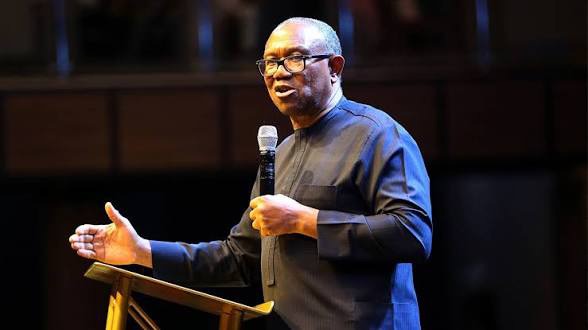
Peter Obi, the presidential candidate of the National Development Congress (NDC), has expressed concern over the long-term decline in the value of the naira, arguing that Nigeria’s economic performance has weakened significantly over the past four decades.
Speaking in a video shared by Advocacy for Good Governance on Monday, July 13, 2026, Obi reflected on a lecture he delivered at Princeton University, where he discussed Nigeria’s economic trajectory since the early 1980s.
According to Obi, the depreciation of the naira is evident when comparing its value in 1983 with current exchange rates. He said that in October 1983, ₦1 million was equivalent to about $1.5 million, whereas today the same amount would fetch about $1,000.
The former Anambra State governor also cited salaries in the education sector during that period, stating that lecturers and professors at the University of Nigeria, Nsukka, earned between ₦1,000 and ₦1,200 monthly. He argued that, at the prevailing exchange rates, those earnings translated into significantly greater purchasing power than they do today.
Obi further pointed to the prices of vehicles in the early 1980s, noting that Peugeot 504 and Peugeot 505 models sold for between ₦4,000 and ₦7,000, which he said were relatively affordable compared with the incomes of professionals at the time.
He argued that these comparisons illustrate the extent to which the naira has weakened over the years, contributing to rising economic hardship and a decline in living standards.
Obi said addressing Nigeria’s economic challenges would require long-term policies focused on increasing productivity, strengthening domestic industries, encouraging investment, creating jobs, and boosting economic output. He added that restoring confidence in the economy and improving the value of the naira would depend on reducing reliance on imports and building a more sustainable production-driven economy.