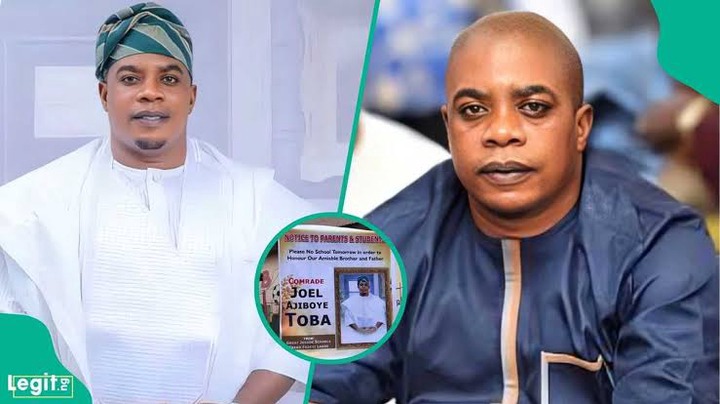
The killing of the Lagos State Organising Secretary of the National Union of Road Transport Workers (NURTW), Toba Ajiboye, popularly known as Toba Ijaya, has continued to stir concern over the persistent violence associated with motor park politics in Lagos State.
According to a report by The PUNCH, family members, colleagues, friends, and supporters gathered in Fadeyi, Lagos, on Tuesday to pay their final respects to the slain transport union leader.
The report stated that sources familiar with the matter believe preliminary investigations suggest Ajiboye’s killing was a carefully planned and coordinated attack rather than a random act of violence. However, authorities have yet to officially announce the motive behind the assassination or identify those responsible.
Reacting to the incident, the Chairman of Fadeyi Motor Park, Alhaji Bariu Ibrahim, popularly known as Ofelohun, rejected suggestions that Ajiboye’s death was the inevitable consequence of his past reputation.
According to Ibrahim, the late union official had renounced violence and devoted himself to promoting peace before he was killed.
He said Ajiboye had consistently encouraged people to abandon fighting and believed he no longer had enemies.
Speaking to Saturday PUNCH, Ibrahim said the slain NURTW leader deliberately chose not to move around with armed escorts because he was convinced he had not wronged anyone.
“He had declared that fighting must end—that no one should pick up arms again—and yet they killed him. He wasn’t carrying any grudges or wrongdoing. If he had been, they wouldn’t have gotten to him so easily,” Ibrahim said.
The motor park chairman disclosed that he and several associates repeatedly advised Ajiboye to strengthen his personal security due to concerns about his safety.
According to him, they encouraged the late union leader to employ security personnel or travel with protection, but he consistently rejected the advice.
“We urged him to take security, but he refused. He said he hadn’t wronged anyone, so why should he live in fear?” Ibrahim said.
He explained that Ajiboye believed his decision to distance himself from violence meant he had no reason to fear attacks or reprisals.
Ibrahim maintained that the late transport union leader genuinely believed he had embraced peace and therefore saw no need for armed protection.
Beyond discussing the circumstances surrounding Ajiboye’s death, Ibrahim described him as a generous and compassionate figure who regularly supported members of his community.
According to him, Ajiboye routinely provided meals for hundreds of people during the Muslim fasting month of Ramadan and donated rams for Eid-el-Kabir celebrations.
He also said the deceased was widely known for assisting people who approached him for help, adding that he remained committed to supporting those in need whenever he had the opportunity.
Ibrahim said these charitable acts reflected the transformation Ajiboye had undergone in recent years and reinforced his belief that the slain union leader had genuinely turned away from violence before his death.
Ajiboye’s assassination has once again drawn attention to the long history of violent rivalries linked to transport union politics in parts of Lagos State, particularly within the Mushin-Fadeyi axis, where clashes over influence and territorial control have repeatedly resulted in loss of lives.
The killing has also reignited discussions about the safety of transport union officials and the need for improved security measures for individuals who may be vulnerable to targeted attacks.
While investigators continue to examine the circumstances surrounding the assassination, no official findings have been released regarding those responsible or the motive behind the killing.
Residents and stakeholders have continued to call for a comprehensive investigation to ensure that those behind the attack are identified and prosecuted.
Ibrahim’s remarks present a picture of Ajiboye as a man who believed he had left conflict behind and no longer saw himself as having enemies.
According to the NURTW chairman, that belief ultimately influenced the late union leader’s decision to reject repeated advice to move with security personnel, insisting that he had done nothing to anyone that would make him fear for his life.
As investigations continue, Ajiboye’s family, colleagues, and supporters say they remain hopeful that justice will be served, while remembering him for what they described as his efforts to promote peace and his generosity toward members of his community.