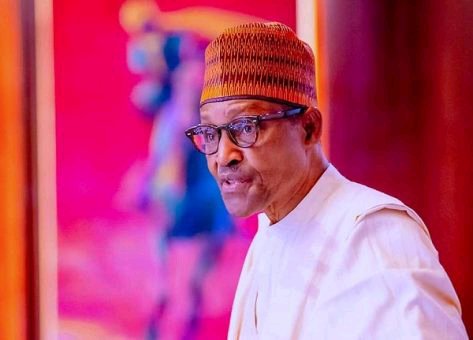
According to a report by Daily Post on Wednesday, June 17, 2026, former Head of State, General Abdulsalami Abubakar (retd.), has expressed the view that Nigeria might have recorded greater economic progress, improved governance, and a more structured social order if the military administration led by Major-General Muhammadu Buhari and Brigadier Tunde Idiagbon had continued beyond its 20-month tenure.
Abdulsalami made the remark while reflecting on Nigeria’s political history and the series of military interventions that shaped the country’s governance structure over the years.
He made the observation in Chapter 10 of his autobiography titled “Call of Duty: My Autobiography,” specifically in a section named “One Coup after the Other,” where he examined the recurring military takeovers in Nigeria and the gradual politicisation of the armed forces during different eras.
In the chapter, he provided reflections on how successive military governments influenced the country’s political and administrative development, as well as the long-term effects of those interventions on national stability.
According to him, although the Buhari-Idiagbon regime was associated with strict policies and widely debated governance practices, it was able to restore a sense of discipline, patriotism, and order at a time when many Nigerians had become dissatisfied with the preceding civilian administration.
He noted that the leadership style of the period placed emphasis on national discipline and a renewed focus on public conduct, which he suggested contributed to a temporary improvement in societal order.
Abdulsalami further stated that the administration introduced several measures aimed at promoting law and order across the country.
These included environmental sanitation exercises, enforcement of orderly queues in public places, and stricter regulations guiding public behaviour.
He explained that these policies were part of broader efforts to instil discipline and address what the government at the time perceived as growing social indiscipline and administrative decay within the system.
He also acknowledged that the government faced widespread criticism for its methods of governance, particularly regarding issues such as detention without trial, restrictions on press freedom, and the imposition of harsh penalties on political actors.
However, Abdulsalami maintained that despite these criticisms, the administration’s intentions were directed towards addressing what it viewed as systemic decay and restoring order within the country’s institutions and public life.
The former Head of State concluded that, in his assessment, the government was still moving in a direction it considered positive before it was overthrown on August 27, 1985.
He suggested that the interruption of the regime altered the trajectory of reforms it had initiated.
He said, “If the Buhari regime had stayed longer, I have a feeling Nigeria may not be where it is today. Perhaps, there would have been at least some law and order in the country.”