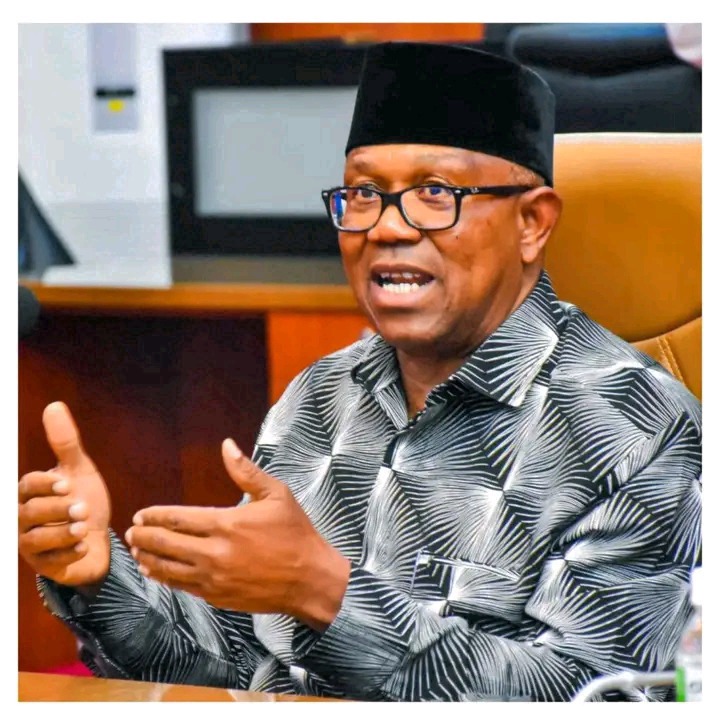
The Deputy National Chairman (North West) of the African Democratic Congress (ADC), Hajia Najaatu Mohammed, has criticized the presidential candidate of the Nigeria Democratic Congress (NDC), Peter Obi, alleging that he has consistently avoided competitive party primary elections throughout his political career.
Najaatu made the remarks in an interview published by The Sun Nigeria on Sunday, July 26, 2026, while discussing the political landscape ahead of the 2027 general election and assessing the strengths and weaknesses of leading presidential contenders.
According to her, Obi has not built his political career through highly contested party primaries or prolonged grassroots political battles within his parties.
Instead, she claimed he has often relied on political negotiations, alliances and strategic lobbying to secure key political positions.
“As for Peter Obi, he has never really contested (primary) elections. It is not in his character to contest primary elections. He has always wriggled his way to be a candidate. Even when he was Atiku’s running mate, it was because he went through a primary election, but he lobbied his way to that position. So, it is a weakness as far as I am concerned because people should be able to sling it out as politicians,” Najaatu said.
She argued that politicians seeking leadership positions should be willing to compete openly in party primaries, describing such contests as an important test of political strength and grassroots acceptance.
According to Najaatu, participation in competitive primaries demonstrates a candidate’s ability to mobilize support within a political party and earn the confidence of party members through a transparent electoral process.
She maintained that avoiding such contests, in her view, represents a political weakness rather than a strength.
Najaatu cited Obi’s emergence as the vice-presidential candidate alongside former Vice President Atiku Abubakar as an example of what she described as his preference for political arrangements over direct competition.
Her comments come as political parties and opposition figures continue realignments and consultations ahead of the 2027 presidential election.
Obi’s political career has been marked by several changes in party affiliation in the lead-up to major elections.
In May 2022, he resigned from the Peoples Democratic Party (PDP) shortly before the party’s presidential primary, citing concerns about the internal process and what he described as the growing influence of money in politics.
He subsequently joined the Labour Party, under whose platform he contested the 2023 presidential election.
Obi’s 2023 presidential bid significantly reshaped Nigeria’s political landscape, attracting widespread support, particularly among young voters, professionals and many urban communities across the country.
As political consultations intensified ahead of the 2027 elections, Obi became involved in discussions among opposition leaders seeking to build broader alliances against the ruling All Progressives Congress (APC).
According to the account presented, disagreements and internal challenges within the coalition later prompted him to leave the ADC before the party’s presidential primary.
He subsequently joined the Nigeria Democratic Congress (NDC), where he emerged as the party’s presidential candidate for the 2027 election.
Najaatu’s remarks add to the growing debate over the leadership qualities, political strategies and electoral prospects of leading opposition figures as preparations for the next general election gather momentum.
Political analysts have noted that internal party democracy, coalition-building and candidate selection processes are likely to remain central issues in the months leading to the 2027 polls.
The exchange also reflects the increasingly competitive political environment, with key stakeholders continuing to evaluate the records, strengths and perceived weaknesses of potential presidential contenders.
While Najaatu questioned Obi’s approach to party primaries, the former Anambra State governor has previously defended his political decisions, including his departure from the PDP in 2022, maintaining that they were guided by his principles and his vision for Nigeria’s political future.
The debate over candidate selection and party democracy is expected to remain a prominent feature of political discussions as parties finalize their strategies and prepare for what is anticipated to be a closely contested presidential election in 2027.