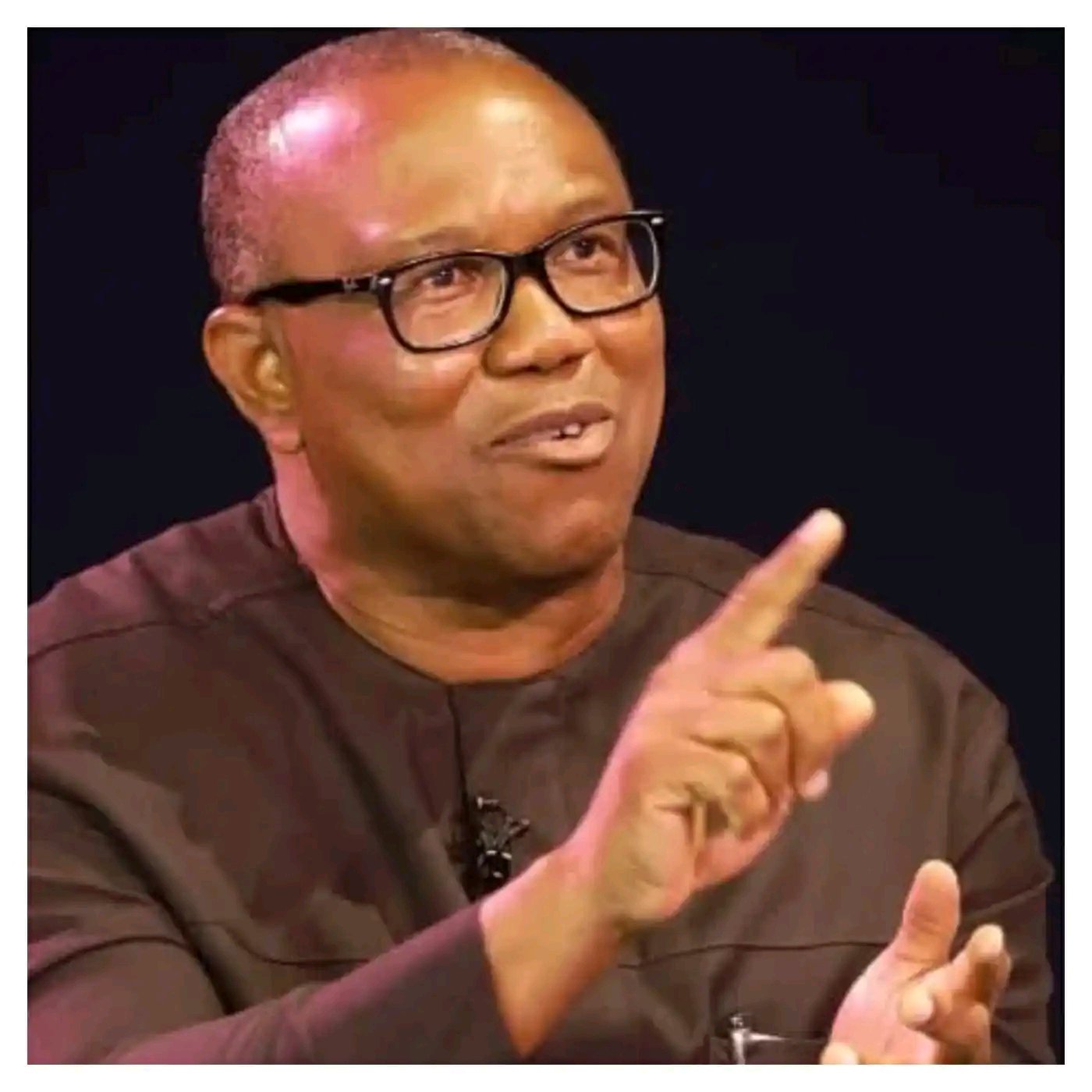
According to a report that was published by Daily Post, Peter Obi, the presidential candidate of the Nigeria Democratic Congress (NDC), has stated that the political influence or collective support of state governors will not determine the outcome of the presidential election that will take place in Nigeria in 2027.
He stated that endorsements from political office holders do not automatically guarantee election victory. Instead, he emphasised that, the ability to make decisions continues to rest with ordinary people that are located all throughout the country.
The remarks were made by Obi in the context of addressing bigger political problems including leadership, electoral dynamics, and the changing character of voter behaviour in advance of the upcoming general elections.
During a recent interview that took place in Washington, District of Columbia, he made these remarks. During the course of the discussion, he discussed a wide range of national and political subjects, including his thoughts on previous elections and his anticipations for upcoming battles.
It was through the interview that he was able to reassert his views on the ways in which political institutions and alliances frequently impact public perception. Additionally, he was able to stress what he considers to be the most important role that voters should play in determining the outcomes of elections.
The chance presented itself, and he took advantage of it to talk about how political power and popularity are evaluated in a democratic environment.
Another point that Obi emphasised was that the number of governors who are in agreement with a certain presidential contender should not be considered a determining factor in determining who would win the election.
According to him, the political power that is gained from the support of institutions does not necessarily convert into actual votes cast at polling stations.
Regardless of the political connections of state leaders or established power blocs inside the system, he said that elections are ultimately decided by individuals who make independent choices. He said this regardless of the fact that elections are finally chosen.
When Obi reflected on his experience in the presidential election of 2023, he mentioned that he did not have the support of any state governors during that election. In spite of this, he stated that he was still able to achieve major achievements across the country, scoring victories in twelve different states among them.
He used this as an illustration to convey his position that the outcomes of elections are affected more by the feeling of voters than by the endorsements of elite political figures or the institutional support of state-level entities.
He went on to clarify that the political climate that will prevail in the general elections of 2027 is likely to follow a pattern that is comparable to the one that has been observed in the past. He stated that the involvement of the grassroots and direct voter connection would be more important than the alignment of governors or other powerful political office holders.
Rather than relying heavily on political structures or endorsements from well-established personalities within the system, he emphasised that candidates will need to concentrate on creating trust with the electorate in order to be successful.
According to him, the changing nature of Nigerian politics indicates that voters are becoming more independent in their decision-making, which is a reduction in the traditional power of political godfathers and control at the state level.
According to him, this trend would continue to define voting behaviour in the upcoming elections, particularly because citizens are increasingly evaluating candidates based on personal belief and perceived performance rather than institutional endorsements. He believed that this movement would continue to impact electoral conduct.
“For the election in 2027, it does not matter if all 36 governors are with President Tinubu,” he stated when asked about the circumstance.