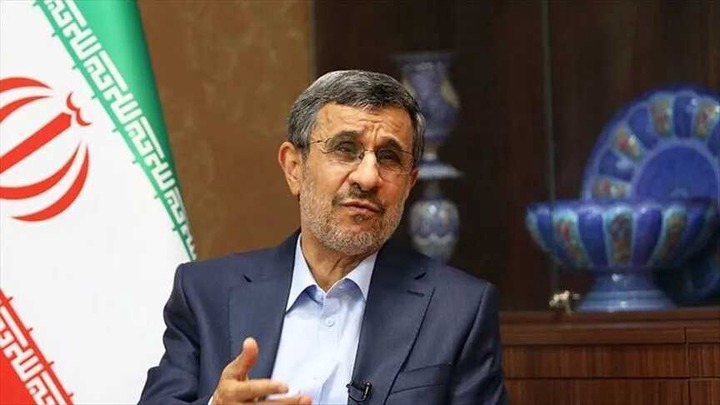
Former Iranian President Mahmoud Ahmadinejad has denied reports alleging that Israel’s Mossad intelligence agency attempted to recruit him and that he is under house arrest, describing the claims as false.
According to a report by Anadolu Agency published on Tuesday, July 14, 2026, Ahmadinejad’s office issued a statement rejecting a report by The New York Times, which alleged that Israel had spent years cultivating the former president as part of a broader strategy to influence Iran’s political future.
“We categorically reject all the completely false allegations promoted by The New York Times,” Ahmadinejad’s office said.
The statement also dismissed claims that Ahmadinejad is under house arrest, calling the allegation baseless and accusing the newspaper of publishing fabricated information intended to mislead the public and deepen political divisions within Iran.
The denial followed a New York Times report citing unnamed U.S., Israeli, and Iranian officials who alleged that Mossad had sought to persuade Ahmadinejad in recent years to cooperate with Israel. The report also claimed Israeli intelligence viewed him as a potential leader if Iran’s current political system changed, and alleged that he held secret meetings with Israeli intelligence operatives in Hungary before being placed under house arrest after Iranian authorities discovered the contacts.
Ahmadinejad’s office rejected the allegations in their entirety, insisting that the former president remains active and continues his normal daily activities. It also described the claims as “Hollywood-style” fiction.
Neither the Israeli government nor Mossad had publicly responded to the allegations in The New York Times report at the time of publication. Ahmadinejad’s spokesman also declined further comment beyond the official statement.
Ahmadinejad served as Iran’s president from 2005 to 2013 and was widely known for his hardline stance against Israel, repeated criticism of the country, questioning of the Holocaust, and oversight of Iran’s expanding uranium enrichment programme. Since leaving office, he has remained a prominent political figure, despite being barred from contesting several presidential elections and occasionally criticising Iran’s political establishment.
Speculation about his political future intensified after he made a brief public appearance at the funeral procession of Iran’s late Supreme Leader, Ayatollah Ali Khamenei, ending months of absence from public view. His office has now categorically denied reports that he was placed under house arrest.