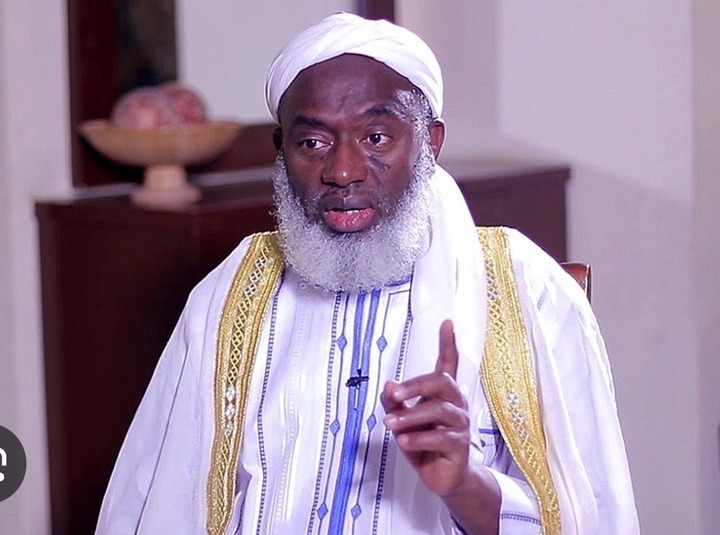
Nigerian Islamic scholar Sheikh Ahmad Gumi has criticized Burkina Faso’s military leader, Captain Ibrahim Traoré, over his position on Sharia and the style of governance being pursued in the West African nation, warning that some of the government’s policies could inadvertently strengthen extremist groups.
According to a report by Daily Post published on Saturday, July 25, 2026, Gumi expressed his views in a post shared on his official Facebook page, where he questioned Traoré’s understanding of the complex relationship between religion, governance, and national security.
The cleric argued that governing a country facing multiple security and political challenges requires more than military experience, saying national leaders must also possess a deep understanding of society, religion, and international affairs.
In his remarks, Gumi described Traoré as a relatively young leader who, in his opinion, lacks sufficient experience to fully appreciate the complexities of governing a country confronting ideological, political, and security pressures.
According to the Islamic scholar, military training alone is not enough to prepare a leader for the broader responsibilities of statecraft, particularly in regions where religious and social issues are closely linked to security concerns.
Gumi maintained that decisions involving religion and governance should be approached with great caution because of their potential impact on public perception and national stability.
He warned that political leaders must carefully consider the broader consequences of their actions, especially in countries already grappling with insurgency and extremist violence.
Commenting specifically on Traoré’s position regarding Sharia, Gumi argued that the Burkinabe leader had underestimated the possible effects of adopting what he described as an anti-Sharia stance.
According to him, such a position could be exploited by extremist organizations seeking to recruit new members.
“Captain Ibrahim Traoré (born 14 March 1988), with his anti-Shariah stance, at the age of 38, with nothing but military training on his resume, is too naive to understand even the complicity of the society he is ruling under the gun, let alone the dynamics of contemporary geopolitics,” Gumi wrote.
The cleric went on to caution that the approach being taken by the military government could unintentionally serve the interests of extremist groups.
“He has given the extremists the weapon they need to conscript more foot soldiers against his secular regime,” Gumi added.
According to the Islamic scholar, issues relating to religion and governance are highly sensitive and require leaders to balance security considerations with an understanding of the beliefs and concerns of the population.
He argued that failing to appreciate those dynamics could create conditions that extremist groups might exploit to advance their narratives and attract new recruits.
Gumi also stressed that effective national leadership demands a broad understanding of regional and international political realities in addition to domestic governance.
He maintained that leaders should recognize how policy decisions can shape public opinion, influence social cohesion, and affect long-term security outcomes.
His comments come amid ongoing discussions about governance, religion, and security in Burkina Faso, where the military-led government has faced persistent security challenges while pursuing policies aimed at stabilizing the country.
The remarks have also added to wider debates over the relationship between secular governance, religious freedom, and efforts to combat extremist violence across the Sahel region.
While supporters of different viewpoints continue to debate the best approach to addressing insecurity, Gumi argued that policies perceived as hostile to religious beliefs could have unintended consequences if not carefully managed.
He emphasized that leaders should remain mindful of the broader social and geopolitical implications of their decisions, particularly in countries facing ideological divisions and prolonged security threats.
Gumi’s criticism has drawn attention to the ongoing conversation surrounding Captain Ibrahim Traoré’s leadership and the challenges of balancing governance, religion, and national security in Burkina Faso.
His comments underscore his view that sustainable peace and stability require not only military action but also a comprehensive understanding of the political, religious, and social factors that shape public attitudes and influence the security environment.