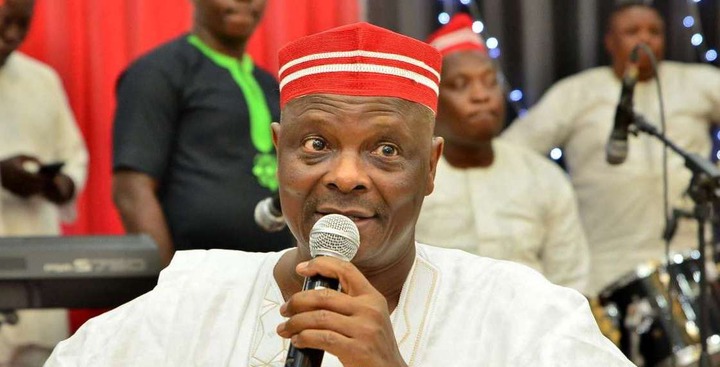
New Nigeria Development Company (NDC) vice presidential candidate and former Kano State Governor Rabiu Musa Kwankwaso has expressed deep concern over Nigeria’s deteriorating security situation, warning that the country’s insecurity could spread further if urgent measures are not taken.
Kwankwaso made the remarks during an interview on News Central TV on Friday, July 24, 2026, where he discussed the growing security challenges affecting different parts of the country and their impact on national development.
During the interview, the former governor observed that insecurity, which was once largely concentrated in Nigeria’s North-East, has gradually spread to other regions over the years.
He explained that the violence initially associated with insurgency in the North-East later expanded into the North-West and North-Central, where communities have also experienced increasing attacks and displacement.
According to Kwankwaso, the security crisis is no longer confined to northern Nigeria, noting that incidents of violence are now being reported in parts of the South.
He described the trend as alarming and warned that, if left unchecked, insecurity could extend even further across the country.
“I’m afraid it may even reach the Atlantic coast, which would be a tragedy for all of us,” Kwankwaso said.
He stressed that the warning should serve as a call for immediate and coordinated action, arguing that the security crisis has evolved into a national challenge requiring a united response from government, security agencies, and citizens.
Kwankwaso said restoring peace and stability should remain the country’s highest priority, emphasizing that no nation can achieve sustainable economic growth without adequate security.
According to him, insecurity has had devastating consequences for communities across Nigeria, forcing thousands of people to flee their homes and disrupting normal social and economic activities.
He noted that many families have been displaced as a result of violent attacks, leaving them without stable sources of income and placing additional pressure on humanitarian support systems.
The former governor also highlighted the impact of insecurity on agriculture, saying many farmers have been unable to cultivate their land because of fears of attacks by armed groups.
He argued that the disruption of farming activities has contributed to reduced agricultural output, worsening food shortages and increasing the cost of food across the country.
According to Kwankwaso, the inability of farmers to safely access their farmlands has had far-reaching economic consequences, affecting food supply chains and placing additional burdens on households already struggling with rising living costs.
He further stated that insecurity has negatively affected education in several communities.
Fear of attacks, he said, has prevented many children from attending school, while some educational institutions have faced repeated disruptions due to security concerns.
Beyond agriculture and education, Kwankwaso argued that insecurity has discouraged investment and slowed economic activities in many parts of Nigeria.
He maintained that businesses are less likely to thrive in environments where lives and property are under constant threat, making improved security essential for economic recovery and long-term national development.
The former Kano State governor emphasized that addressing the crisis requires more than military operations alone.
According to him, effective leadership, stronger coordination among security agencies, and policies aimed at addressing the underlying causes of violence are all necessary to achieve lasting peace.
He argued that tackling the root causes of insecurity would strengthen ongoing efforts to reduce violence and restore stability across affected communities.
Kwankwaso also called on Nigerians to support initiatives aimed at improving national security and promoting unity.
He stressed that overcoming the country’s security challenges would require cooperation among government institutions, security personnel, community leaders, and citizens.
Despite his concerns, Kwankwaso expressed optimism that Nigeria could overcome its security problems with the right leadership and well-coordinated policies.
He said a comprehensive approach focused on strengthening security, protecting communities, and addressing the factors fueling violence would help create a safer environment for all Nigerians.
His remarks come amid continuing national discussions on insecurity and its impact on economic growth, food production, education, and social stability.
By warning that the crisis could spread as far as Nigeria’s Atlantic coastline, Kwankwaso underscored his belief that insecurity is no longer a regional issue but a national challenge that demands urgent attention.
He concluded by reiterating that restoring peace should remain the government’s foremost responsibility, arguing that security is the foundation upon which economic development, national unity, and sustainable progress depend.