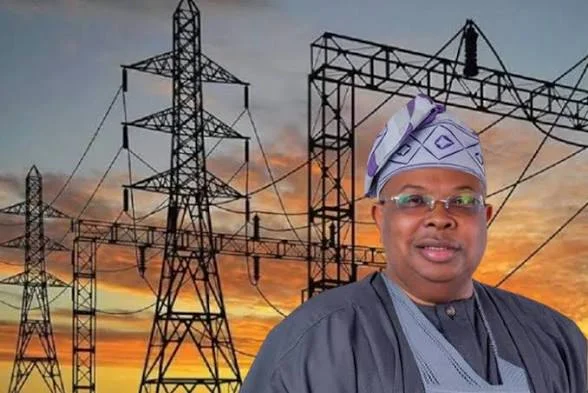
Joseph Tegbe, Minister of Power, says the success of Nigeria’s power sector should no longer be measured primarily by the amount of electricity generated, but by how many communities and people have access to reliable power.
Tegbe made the remarks on Friday, August 7, during the inauguration of the governing board of the Rural Electrification Agency (REA) in Abuja.

The minister said the agency’s mandate goes beyond connecting communities to electricity, describing it as a key institution for expanding economic opportunities and improving livelihoods. “We are moving from just counting kilowatts and megawatts to how many communities and people were powered in the country,” Tegbe said.
He said every mini-grid established, solar home system deployed, and market, school, healthcare centre, farm or productive enterprise connected to electricity represents an investment in human capital, economic inclusion and national development.
Tegbe said the implementation of the Electricity Act and ongoing reforms in the Nigerian Electricity Supply Industry had further increased the importance of the REA. According to him, the agency serves as a link between government policy and grassroots development by extending electricity access beyond urban centres to underserved communities across the country.
The minister urged the newly inaugurated board to provide strategic leadership, strengthen institutional governance, safeguard public resources and expand partnerships with development institutions and private-sector organisations. He also encouraged the board to ensure that its decisions remain focused on improving the lives and livelihoods of ordinary Nigerians.
The seven-member board is chaired by Ayodele Fayose, former governor of Ekiti State. Other non-executive members are Ahmadu Abubakar and Ilyasu Makinta, while REA Managing Director Abba Aliyu and three executive directors complete the board.
Speaking on behalf of the board, Fayose thanked President Bola Tinubu for the appointment and pledged to support efforts to expand electricity access across the country. He said many of Nigeria’s electricity challenges are concentrated at the grassroots and promised that the board would work to mobilise the resources required to connect more communities to electricity.
“Our assignment is beyond providing electricity. It is about ensuring that Nigerians feel the impact of energy,” Fayose said. He also pledged to pursue adequate funding to support the agency’s short- and long-term electrification programmes.