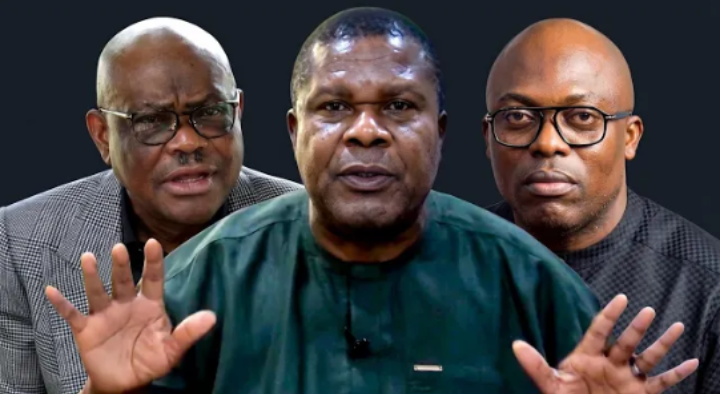
Political discussions intensified after comments by Robinson Nnam-Ewoh defending the emerging rainbow coalition, a political alliance attracting growing attention across Nigeria.
Speaking in support of the coalition, Nnam-Ewoh said its foundation is based on deliberate planning rather than favoritism. He argued that political leadership now requires structure, influence, and strategic positioning, rather than entitlement.
“Wike has a clear strategy. Nobody will be handed power like Fubara,” Nnam-Ewoh said.
His remarks, which referenced Rivers State Governor Siminalayi Fubara, have sparked widespread reactions. Some observers view the statement as criticism of previous political arrangements, while others see it as an acknowledgment of the realities of power transitions in Nigerian politics.
Supporters of the rainbow coalition backed Nnam-Ewoh’s position, describing it as a reflection of the need for discipline, coordination, and long-term planning in leadership. They maintain that the coalition seeks to promote competence and strategic thinking rather than political godfatherism or sudden elevation to power.
Political observers say the comments underscore a broader shift in Nigeria’s political landscape, as new alliances attempt to position themselves as alternatives to established power blocs. Whether the coalition gains wider public support remains uncertain, but the debate has added momentum to ongoing political discourse.