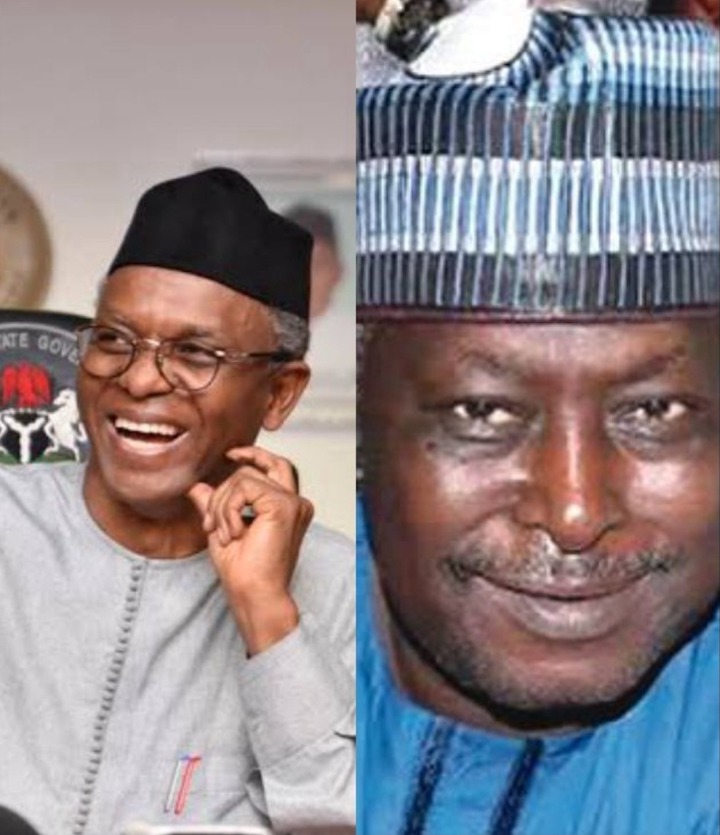
Former Secretary to the Government of the Federation (SGF), Babachir David Lawal, has alleged that the administration of former Kaduna State Governor Nasir El-Rufai arrested community leaders after residents protested the death of their traditional ruler.
Lawal made the claim during an interview on SYMFONI TV while discussing governance, public dissent and political developments during El-Rufai’s tenure as governor of Kaduna State.
According to the former SGF, the incident occurred after members of a community staged a protest demanding answers over the death of their traditional ruler.
He alleged that rather than allowing the demonstration to continue, the authorities arrested those leading the protest.
“When a community in Kaduna protested over their chief’s death, El-Rufai arrested the leaders,” Lawal said during the interview.
Lawal presented the incident as an example of how protests and expressions of public dissatisfaction were allegedly handled during the former governor’s administration.
According to him, the response to the demonstration reflected the government’s approach to community grievances and public protests at the time.
The former SGF made the allegation while assessing governance and the political climate in Kaduna State, using the incident to support his broader criticism of the previous administration.
He did not provide additional details during the interview regarding the identity of the community, the traditional ruler involved or the specific circumstances surrounding the alleged arrests.
The claim has nevertheless drawn attention as part of the wider political debate over governance, accountability and the management of public demonstrations in Kaduna State during El-Rufai’s years in office.
Lawal’s remarks come amid increasing political discussions involving prominent figures ahead of the 2027 general election, with former allies and political opponents offering differing assessments of past administrations and their records in office.
Issues relating to security, governance, civil liberties and the handling of protests have remained recurring topics in Nigeria’s political discourse, particularly as political stakeholders evaluate the performance of previous and current officeholders.
The former SGF’s comments add to the ongoing conversation about leadership, accountability and the relationship between governments and local communities during periods of public unrest.
As of the time of his interview, Lawal’s allegation represented his account of the events he described. No response from former Governor Nasir El-Rufai or his representatives was included in connection with the claim.