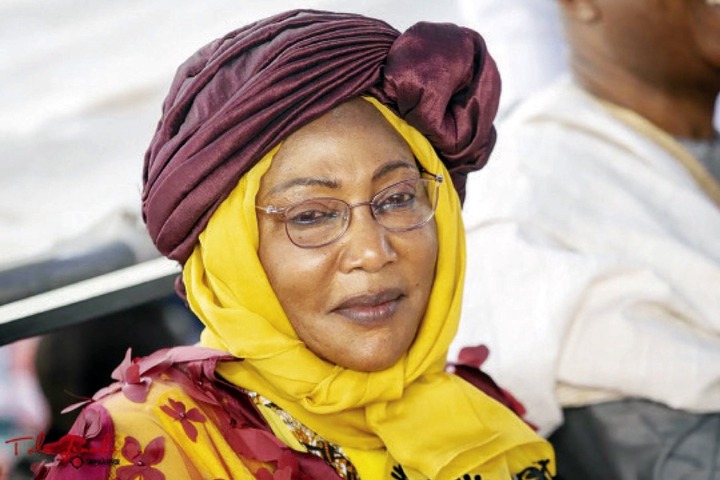
The Deputy National Chairman (North West) of the African Democratic Congress (ADC), Hajia Najaatu Mohammed, has criticized President Bola Ahmed Tinubu’s borrowing policy, alleging that the administration has continued to accumulate debt without providing sufficient accountability for how the funds are being utilized.
Najaatu made the remarks in an interview published by The Sun Nigeria on Sunday, July 26, 2026, where she discussed Nigeria’s economic situation, government spending and the country’s growing debt profile.
According to her, President Tinubu made his position on borrowing clear from the beginning of his presidential campaign, arguing that borrowing was a normal practice adopted by many countries.
Recalling her time in the All Progressives Congress (APC), Najaatu said the President openly declared during the inauguration of the party’s Presidential Campaign Council that his administration would not hesitate to take loans if necessary.
“On the day that the Presidential Campaign Council was inaugurated (when I was in APC), Tinubu stood up and said that everybody was borrowing and so he would borrow and borrow and borrow. These were his words from inception. The next question to ask is where is all the money going? The administration said it is making billions or trillions from internal revenue (from Customs, etc.) and it removed fuel subsidies,” she said.
Najaatu questioned the impact of the government’s borrowing and increased revenue generation, arguing that many Nigerians have yet to experience noticeable improvements in their standard of living.
According to her, the administration has consistently highlighted increased earnings from agencies such as the Nigeria Customs Service, while also pointing to additional revenue generated following the removal of the fuel subsidy.
Despite those developments, she argued that ordinary citizens continue to face economic hardship, rising living costs and limited relief from government policies.
The ADC chieftain also raised concerns about the management of public finances, alleging that reports of misappropriation involving senior government officials have heightened public anxiety over how government resources are being spent.
She maintained that greater transparency and accountability are necessary to assure Nigerians that borrowed funds and internally generated revenues are being deployed for projects capable of improving the country’s economy and citizens’ welfare.
The issue of government borrowing has remained a recurring topic in Nigeria’s political and economic discourse, with opposition leaders frequently questioning the sustainability of the country’s debt profile and the effectiveness of public spending.
Former Labour Party presidential candidate Peter Obi has also commented on the issue, arguing that borrowing itself is not inherently problematic if the funds are invested in productive sectors capable of stimulating economic growth and generating sufficient returns.
According to Obi, loans can be justified when they finance infrastructure, industrial development and other projects that strengthen the economy and improve the country’s capacity to repay its obligations.
He has, however, expressed concern that a significant portion of government borrowing and revenue is being directed toward recurrent expenditure and other areas that do not produce lasting economic value.
Supporters of the Tinubu administration have defended the government’s borrowing policy, arguing that many developing economies rely on debt financing to fund critical infrastructure and economic development programmes.
President Tinubu has also maintained that borrowing should not automatically be viewed negatively, insisting that loans can be beneficial when managed responsibly and used to deliver projects that improve the lives of citizens.
The President has repeatedly argued that governments around the world borrow to finance development, provided such loans are invested wisely and repayment obligations are met.
The debate over borrowing has become increasingly significant as Nigeria continues to confront inflation, rising living costs, infrastructure deficits and broader economic reforms introduced by the current administration.
Economic analysts have noted that while borrowing can provide governments with resources for development, its long-term impact depends largely on fiscal discipline, prudent management and the productive use of borrowed funds.
Najaatu’s remarks add to the ongoing national conversation over public finance, debt management and economic governance, as political leaders and stakeholders continue to debate the best strategies for improving Nigeria’s economy and ensuring that public resources are managed transparently and effectively.
Her comments also come amid sustained discussions over the Tinubu administration’s economic policies, with supporters highlighting ongoing reforms while critics continue to question whether those measures are delivering meaningful improvements in the daily lives of Nigerians.